Double the Fun: Why Chinese Loves to Say It Twice
Discover the secret world of reduplication, where repeating a word makes everything cuter, warmer, and a hundred times more natural in everyday Mandarin.
Subtitle: A quick tease — discover the secret world of reduplication, where repeating a word makes everything cuter, warmer, and a hundred times more natural.
📚 What’s the Trick About?
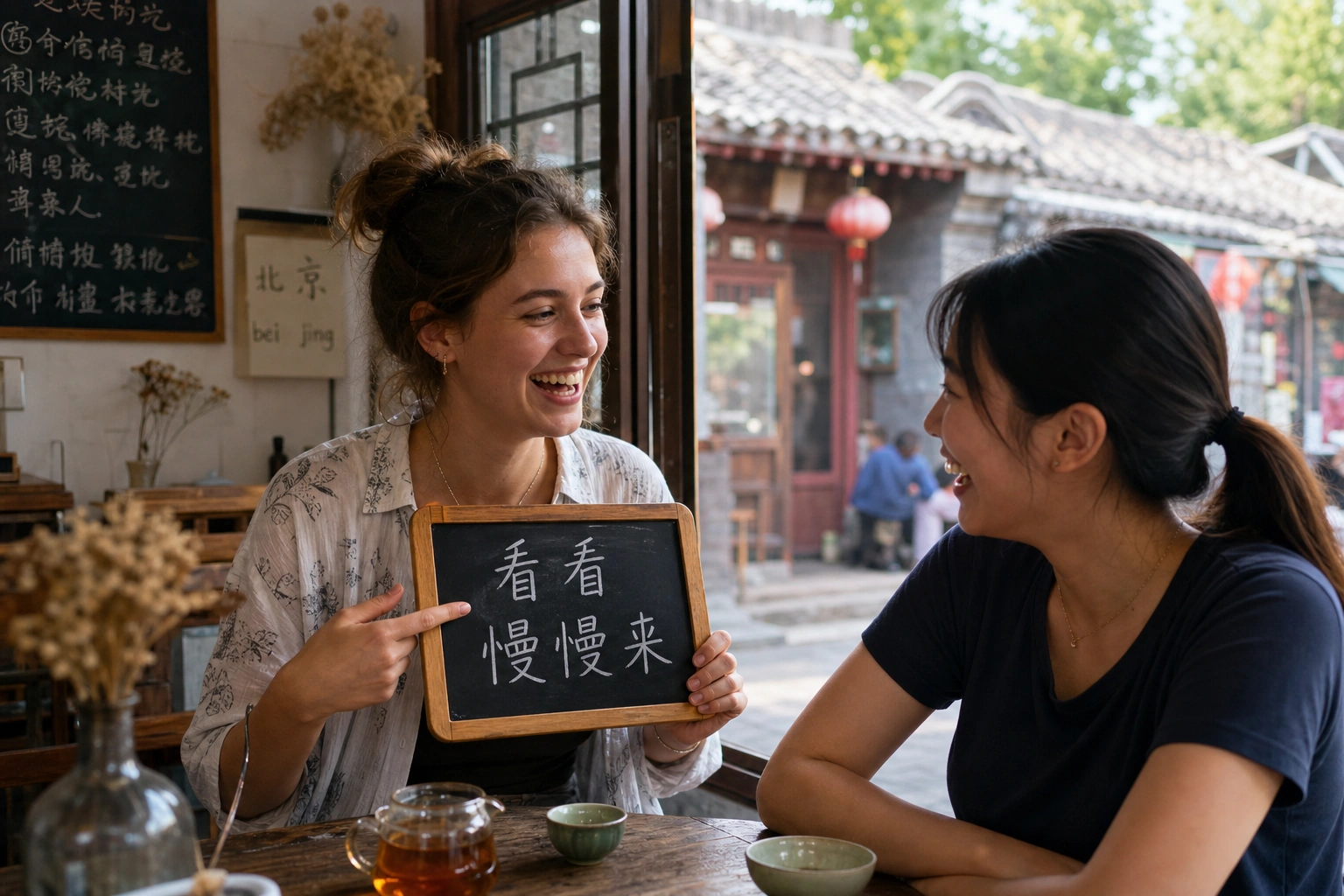
I still remember sitting in a tiny noodle shop in Chengdu, proudly ordering my lunch in what I thought was perfect Chinese. My friend smiled and said, “别急,慢慢来bié jí, màn man lái · don't worry, take it slow.” Màn man? I thought he’d stuttered. Why say “slow” twice? Was that a mistake?
Nope. I’d just stumbled onto one of the most delightful features of Chinese: reduplication. It’s when a word gets repeated, and in that repetition it gains a whole new flavor — softer, cozier, more playful. In English we might say “bit by bit” or “easy-peasy,” but Chinese does this all the time, and learning it was like getting a backstage pass to how locals actually chat. Here’s something I wish I knew earlier: if you want to stop sounding like a textbook robot, start doubling your words.
🔍 Let’s Break It Down
Think of reduplication as sprinkling a little friendly seasoning on your sentence. The same word twice doesn’t just mean the same thing; it often makes the meaning lighter, casual, or cuter.
-
Verbs get a “just a little” vibe
看kàn · look means “look.” 看看kànkan · have a look, browse means “have a look, browse.” It turns a command into a gentle invitation. My friend wasn’t ordering me to slow down — he was saying “just take it easy.” I started using 试试shìshi · give it a try whenever I was nervous at a market stall, and suddenly people smiled more. -
Adjectives become vivid or gentle
小xiǎo · small is “small,” but 小小的xiǎo xiǎo de · tiny, adorable paints a picture of something tiny and endearing, like a kitten’s paw. 红hóng · red is red, but 红红的hóng hóng de · rosy red gives you that rosy, blushing cheek feeling. -
Nouns turn into cute nicknames
A cat is 猫māo · cat, but when my host family’s daughter talked about her pet, it was always 猫猫māomāo · kitty — the kitty. Even stars in the sky become 星星xīngxing · stars, little twinkly things.
Imagine a scale: 看kàn · look = look. 看看kànkan · have a little peek = have a little peek. It’s like the difference between a formal handshake and a casual wave. And measure words? 天tiān · day (day) → 天天tiāntiān · every day = every single day, non-stop. You’ll hear it in pop songs, in sweet nothings, and when a friend tells you to 慢慢走màn man zǒu · walk slowly.
🗣️ Try These Out: Essential Phrases
| Chinese | Pinyin | English |
|---|---|---|
| 看看 | kànkan | have a look |
| 慢慢来 | màn man lái | take it easy / slowly |
| 小小的 | xiǎo xiǎo de | tiny, adorable |
| 星星 | xīngxing | star |
| 天天 | tiāntiān | every day |
| 吃吃看 | chī chi kàn | give it a taste |
🚫 Common Pitfalls (Don’t Sweat It)
1. Turning any word into double trouble.
I once called a dress 漂亮亮piào piào liang liang · incorrect reduplication of pretty to sound enthusiastic, and got a confused giggle. Not every two-syllable word works that way. 漂亮piàoliang · pretty can’t be casually doubled like that; you’d say 很漂亮hěn piàoliang · very pretty for “very pretty,” or 漂漂亮亮piào piào liang liang · pretty and neat-looking only in certain patterns. I made that mistake and survived — my friend still tells the story with affection.
2. Over-reduplicating adjectives.
You can say 高高兴兴gāo gāo xìng xìng · happy-happy; cheerfully from 高兴gāoxìng · happy, but not every adjective fits the AABB mold. Start with the simple ones you hear often, and let your ear guide you. You’ll sound charming, not silly.
💡 One More Fun Fact
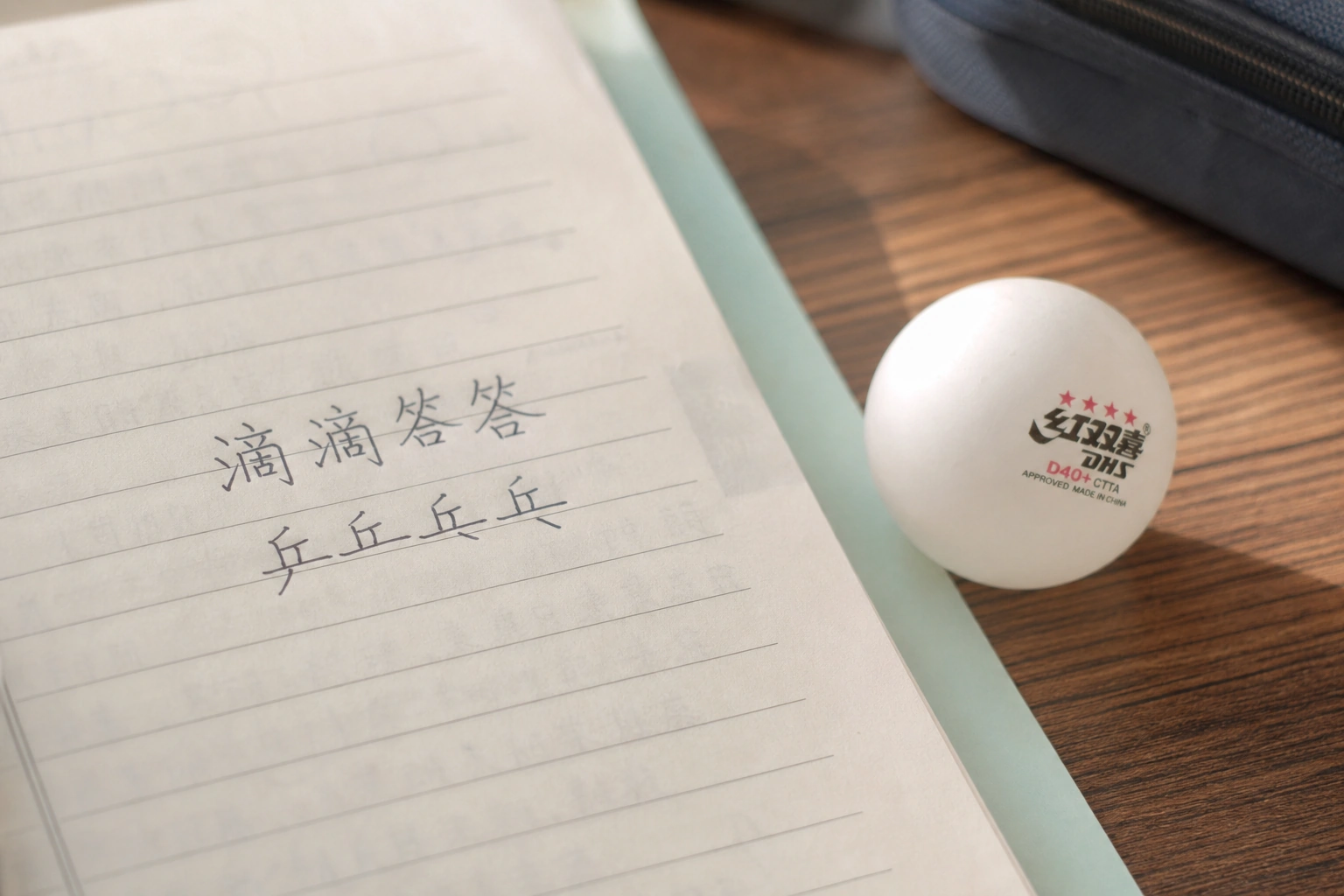
Reduplication isn’t just for softness — it’s a sound effect machine. Rain goes 滴滴答答dī dī dā dā · drip drop, ping pong is 乒乒乓乓pīng pīng pāng pāng · ping pong sounds. Even internet slang gets in on it: 嗯嗯ēn'ēn · uh-huh, got it for “uh-huh, got it,” or 哈哈hā hā · haha for laughter. It’s like the language has a built-in playful rhythm, and once you notice it, you’ll hear it everywhere — in lullabies, cat calls (the flirting kind and the actual cat kind), and kind words over a hot bowl of noodles.
🥠 Keep Playing
Reduplication is your gentle way into sounding more human in Chinese. Listen for it in dramas, try a friendly 等等děngděng · wait a sec with a vendor, and enjoy the instant warmth it brings. You don’t have to get it perfect; just playing with it is half the fun.
Which reduplicated word have you heard that made you smile — or which one are you itching to try first?
Master Chinese the right way — start with LingoTouch
You might also like
The Tiny Words That Unlock Chinese: 了、的、吧
Particles like 了, 的, and 吧 aren't just grammar dust you sprinkle randomly — they're the emotional glue of Chinese, and feeling their personalities transforms your speech.
Crack the CodeThe Day I Ordered “One Noodle”
Measure words aren't boring grammar — they're tiny picture frames for everything you say. Master a few, and your Chinese instantly feels warmer and more local.
Crack the CodeThat Sneaky “de”: One Sound, Three Musketeers
Nail the difference between 的, 地, and 得 — and sound like a language ninja while having a good laugh at my own blunders trying to keep them straight.