What 红汤 Really Means (and Why Hot Pot Lovers Pick It First)
Hong tang literally translates to 'red broth' — but the color tells you exactly how much sanshool and capsaicin are coming for your tongue. Decoded.
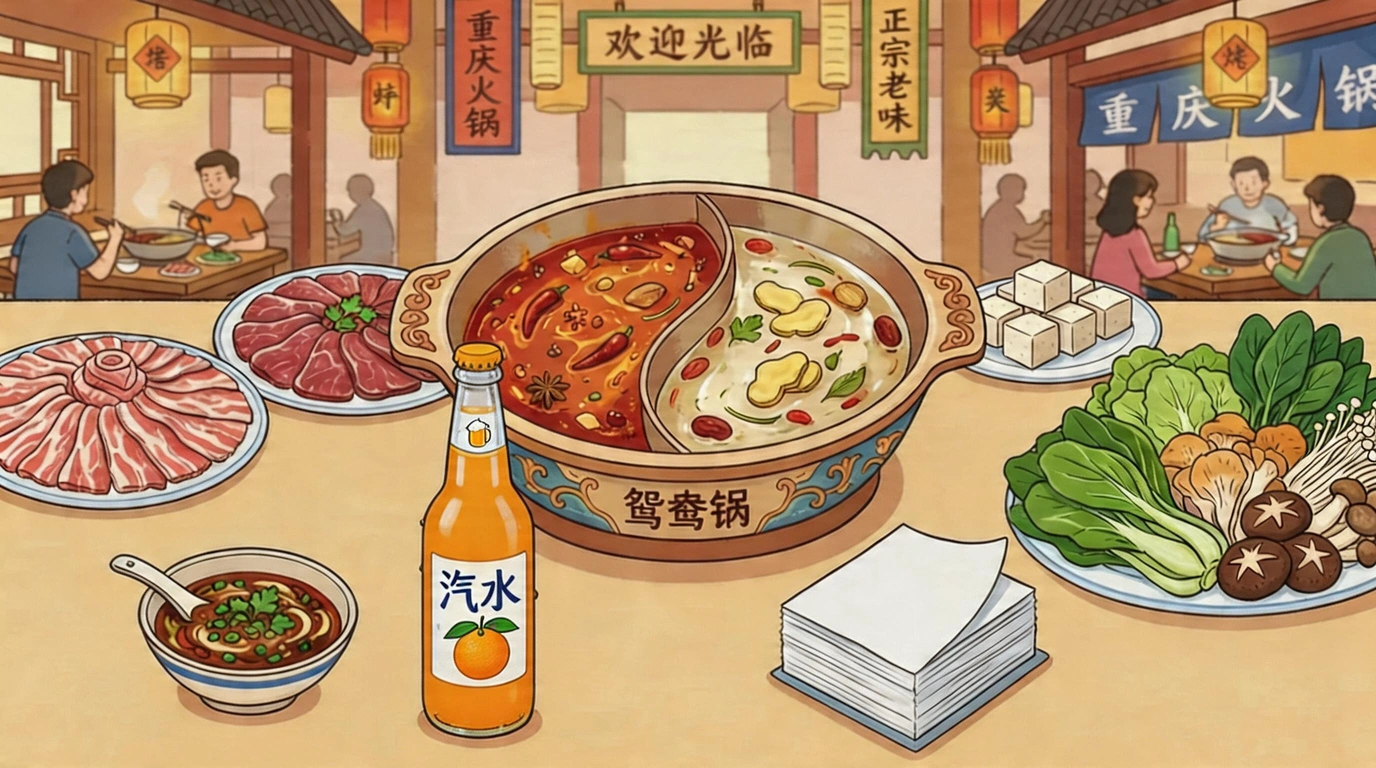
Walk into a Chinese hot pot place and the first question you'll hear is: 红汤还是清汤?hóng tāng háishì qīng tāng · red broth or clear broth?. The answer matters way more than first-time visitors realize, because the literal name — "red broth" — tells you exactly what's coming.
What's actually in 红汤
The deep crimson color of 红汤hóng tāng · red broth isn't food coloring. It's the visible signature of three things layered into the base:
- Beef tallow (牛油niú yóu · beef fat) — gives the broth its sheen and carries fat-soluble flavor compounds
- Dried chilies (干辣椒gàn là jiāo · dried chili pepper) — capsaicin source, what makes your tongue burn
- Sichuan peppercorns (花椒huā jiāo · Sichuan peppercorn) — sanshool source, what makes your tongue tingle
Together they produce the famous 麻辣má là · numbing-spicy sensation — but only the 辣Là part shows up as red. The 麻Má part is invisible.
Why "red" and not "spicy"
Chinese could have called it 辣汤là tāng · spicy broth — and that would have been more literal in English terms. The choice of "red" instead of "spicy" is deliberate:
Color is information. A bowl of 红汤Hóng Tāng tells you visually what to expect before you taste anything. Lighter red? Mild. Dark, oil-slicked, almost black? Run.
This is part of a bigger pattern in Chinese culinary naming — visual cues over taste descriptions, because color is shared knowledge while spice tolerance is personal.
Where it came from
红汤Hóng Tāng as we know it traces to Chongqing dock workers in the late Qing dynasty. The combination of cheap beef tallow, dried chilies (preservation against humidity), and peppercorns (numbing the tongue against rough cuts of meat) was working-class fuel — calorie-dense, anti-microbial, and aggressively flavored to mask whatever you were eating.
It went mainstream in the 1980s when Chongqing-style hot pot exploded across China, then the world. Today it's the default broth in hot pot chains from Shanghai to San Francisco.
So when someone offers you 红汤
You're not just choosing "spicy." You're agreeing to a 150-year-old Sichuanese flavor system — beef tallow, capsaicin, sanshool, layered in a specific order. If that sounds like too much, ask for 鸳鸯锅yuān yāng guō · Mandarin-duck pot — the divided pot — and split the difference.

Hear how "红汤" actually sounds — try LingoTouch
More from the 火锅 scene
清汤: The Quiet Hero of Chinese Hot Pot (Yes, Really)
Qing tang is often dismissed as 'the broth for people who can't handle spice.' That's wrong. The clear broth is its own 1,000-year tradition — here's why locals respect it.
Did You Know?蘸料: The Hidden Half of Hot Pot Most Foreigners Skip
Zhan liao is the dipping-sauce ritual that turns hot pot from food into a meal. Build your own bowl: sesame, garlic, cilantro, vinegar — the rules and the freedom.