清汤: The Quiet Hero of Chinese Hot Pot (Yes, Really)
Qing tang is often dismissed as 'the broth for people who can't handle spice.' That's wrong. The clear broth is its own 1,000-year tradition — here's why locals respect it.
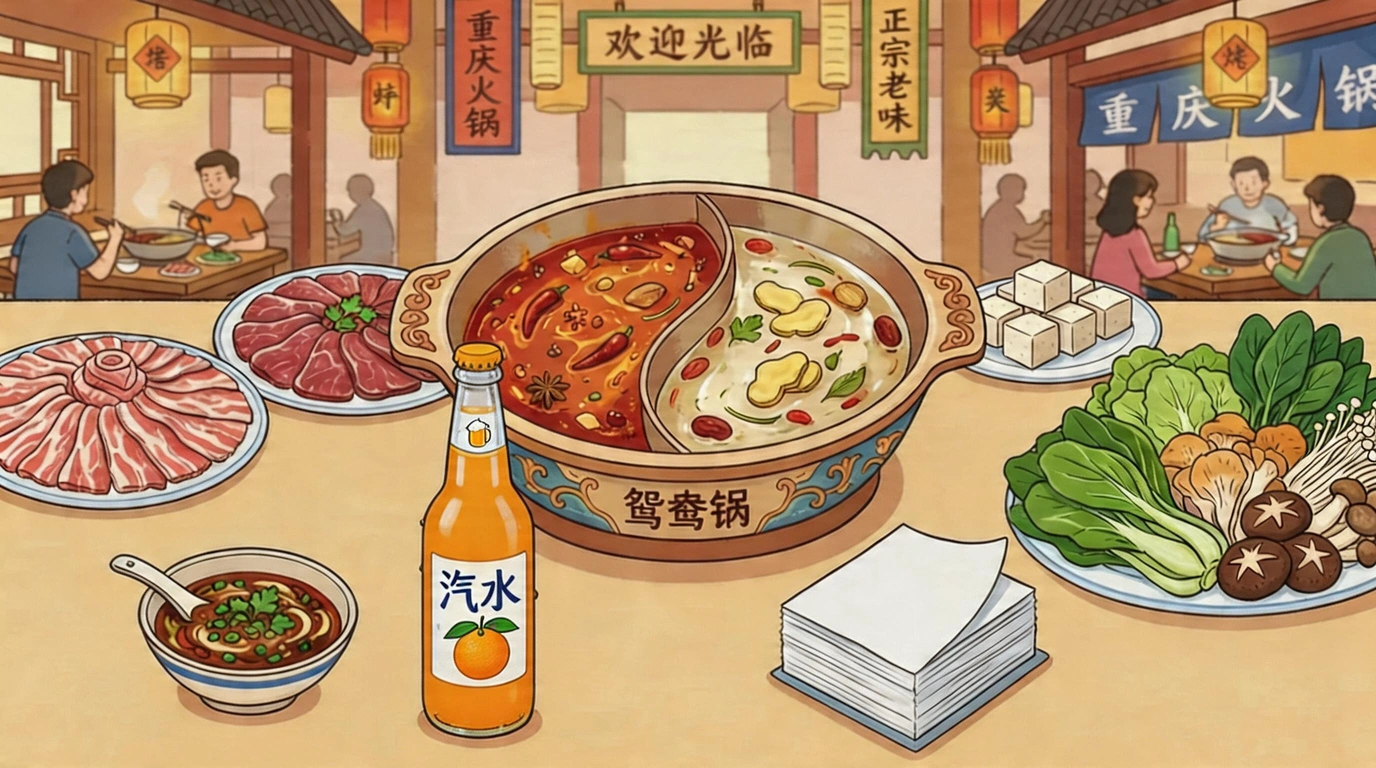
The first time most foreigners order 清汤qīng tāng · clear broth at a Chinese hot pot restaurant, they apologize for it. "Sorry, I can't handle the spicy one." The waiter usually smiles politely, takes the order, and moves on. But what just happened is a small misunderstanding — because 清汤Qīng Tāng isn't a beginner option. It's its own thing entirely.
What 清汤 actually is
清汤Qīng Tāng literally means clear broth. The character 清qīng · clear, pure shows up everywhere in Chinese cuisine — 清蒸qīng zhēng · steam plain (steam without seasoning), 青菜qīng cài · green vegetables (using a near-homophone), 清茶Qīng Chá (plain tea). It signals restraint: minimal interference with the source ingredients.
A real 清汤Qīng Tāng hot pot base is built from:
- Pork or chicken bones (大骨dà gǔ · big bones) simmered for 4–6 hours
- Dried mushrooms (香菇xiāng gū · shiitake mushroom) for umami depth
- Jujubes (红枣hóng zǎo · red dates) for subtle sweetness
- Goji berries (枸杞gǒu qǐ · goji) for color and warmth
- Ginger and scallion for aromatic backbone
That's not a "mild" broth. That's an active flavor system — every ingredient is doing work, just not the kind that punches you in the tongue.
The literal-vs-modern flip
Here's the misalignment that trips up foreigners: in modern usage, hot pot menus offer 红汤Hóng Tāng (spicy) vs 清汤Qīng Tāng (mild) as if they're a binary — heat-on or heat-off. But the original meaning of 清汤Qīng Tāng isn't "no spice." It's "the broth where the bones speak."
A great 清汤Qīng Tāng at a Beijing hot pot place will taste completely different from one in Sichuan, even though both are "clear." Beijing version leans on lamb bones and goji. Sichuan version is often surprisingly seasoned with subtle white peppercorns. Singapore version uses chicken and Chinese yam.
Calling it just "the mild one" misses 1,000 years of regional variation.
Why locals respect it
Watch a Chinese family at a hot pot restaurant. The grandparents almost always order 鸳鸯锅yuān yāng guō · Mandarin-duck pot (split pot) and use the 清汤Qīng Tāng side first. Why? Because if you cook delicate ingredients — fresh shrimp, sliced fish, leafy greens — in 红汤Hóng Tāng, the spice flattens them. Everything tastes the same: hot.
In 清汤Qīng Tāng, every ingredient retains its own voice. That's why hot pot connoisseurs almost always start with the clear side and work their way to the spicy side as the meal progresses.
So next time you order it
Don't apologize. Just say 清汤qīng tāng · clear broth with the confidence of someone who knows what they're getting: a 1,000-year-old broth tradition built on slow extraction, regional terroir, and respect for ingredients. That's not a beginner choice. That's a connoisseur's choice.

Hear how "清汤" actually sounds — try LingoTouch
More from the 火锅 scene
What 红汤 Really Means (and Why Hot Pot Lovers Pick It First)
Hong tang literally translates to 'red broth' — but the color tells you exactly how much sanshool and capsaicin are coming for your tongue. Decoded.
Did You Know?蘸料: The Hidden Half of Hot Pot Most Foreigners Skip
Zhan liao is the dipping-sauce ritual that turns hot pot from food into a meal. Build your own bowl: sesame, garlic, cilantro, vinegar — the rules and the freedom.